
Two nights in the Sahara
Camel treks, sunrise yoga on the dunes, Gnawa music and a sky that stays with you.
Under the Milky Way, the Sahara does more than hold you. It remakes you.
There are few experiences in life that feel both timeless and transformative, and sleeping in the Sahara is one of them. In Merzouga, where the ochre dunes of Erg Chebbi stretch into eternity, the desert whispers the same truths it has carried for thousands of years.
Most groups do one night. We do two. And the second day, with nothing to catch and nowhere to be, is the best day of the whole trip.
What it’s really like in a tented camp
Think Berber carpets, lantern-lit paths, plush beds and endless mint tea.
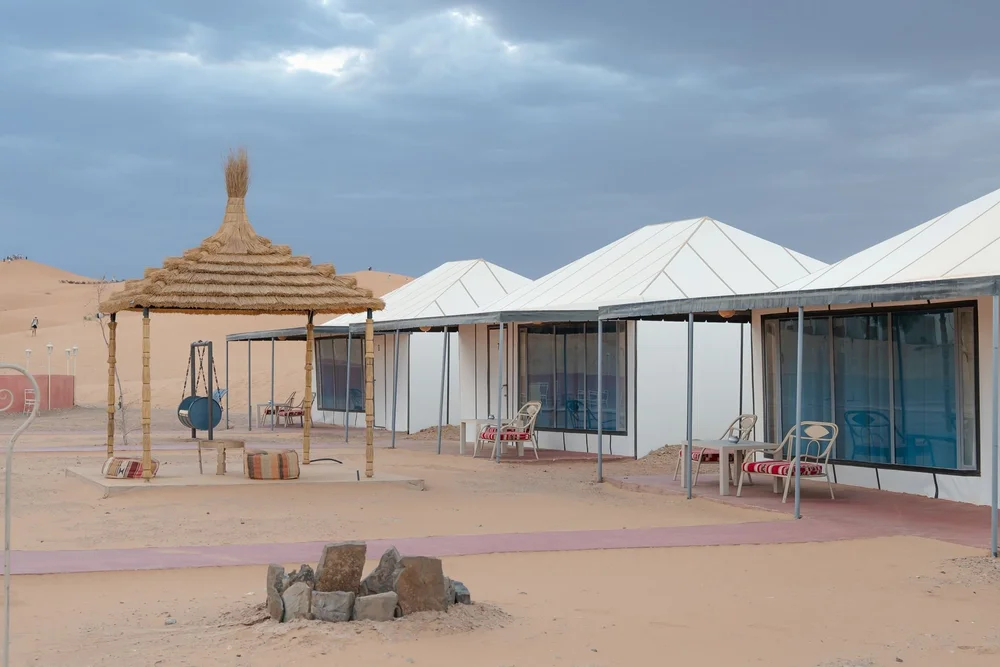
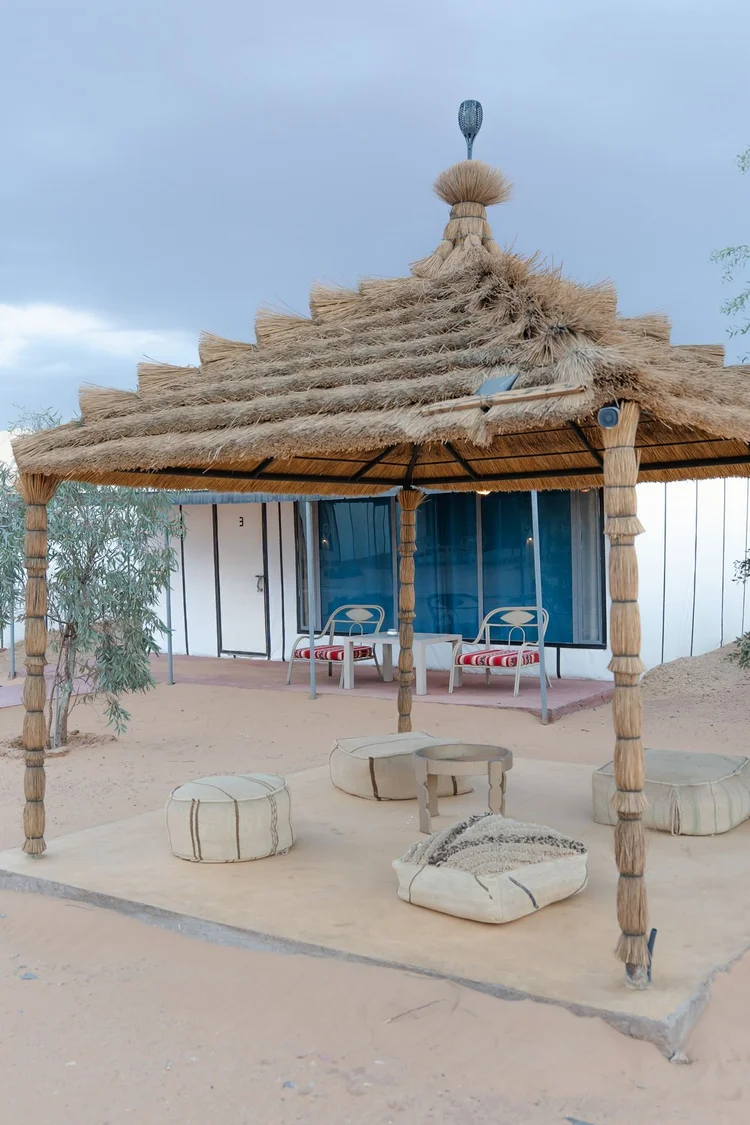
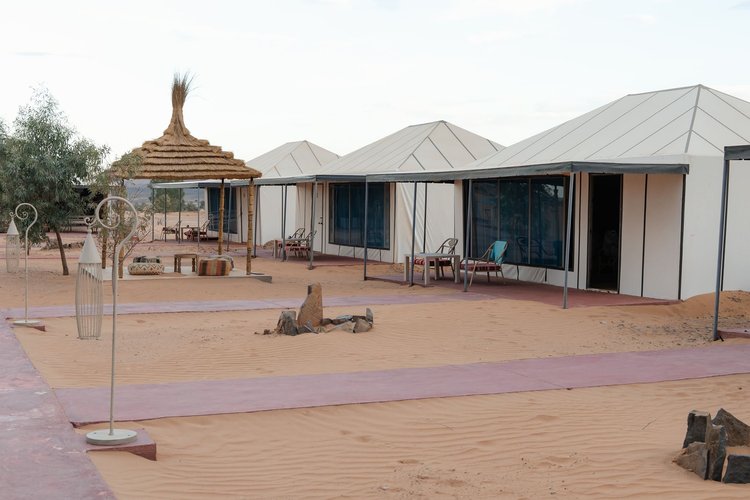
- The caravan in. At golden hour a camel carries you into the sands, the sun melting into the dunes in gold and violet.
- Music by the fire. After dinner the night comes alive with Berber drums, laughter and sparks floating into the sky.
- The sky. Then the stars appear. A flood, the Milky Way arcing across the heavens, far from any city glow.
- Play. Sandboarding down the soft slopes is pure, childlike joy.
Camels, honestly
Let me be honest about camels, because somebody should.
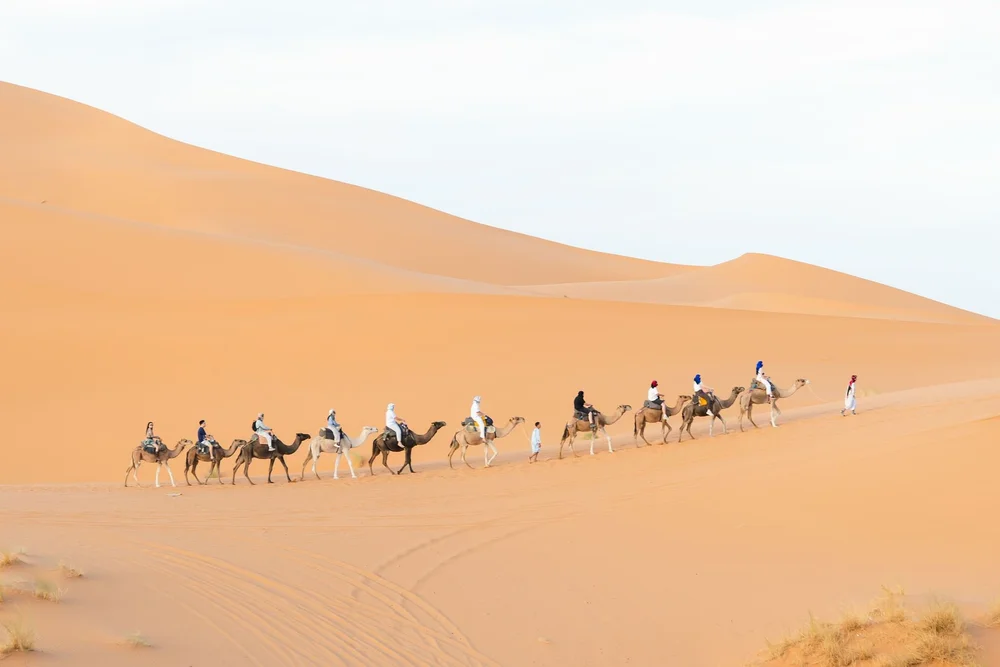
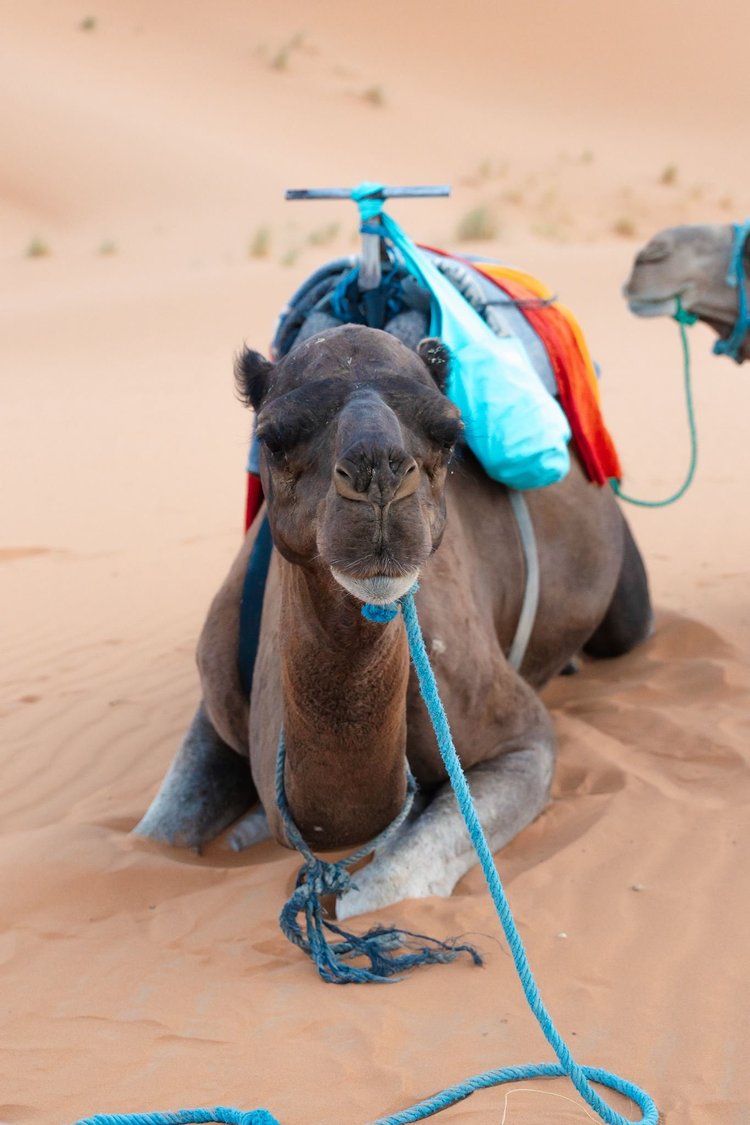
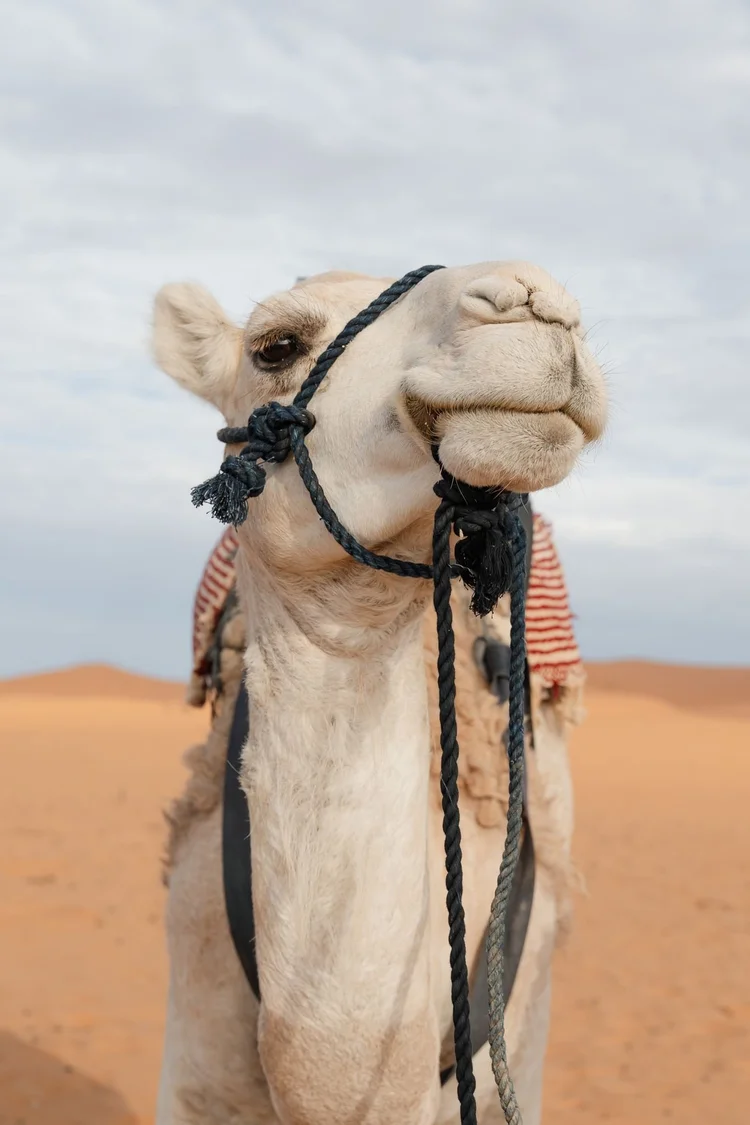
The gait is a lurching sway. The part that unseats people is the mount and dismount, when the camel pitches hard forward and then back. Inner thighs and lower back feel it. An hour is plenty for most first-timers.
Sunrise yoga on the sand
This is the peak of the trip.
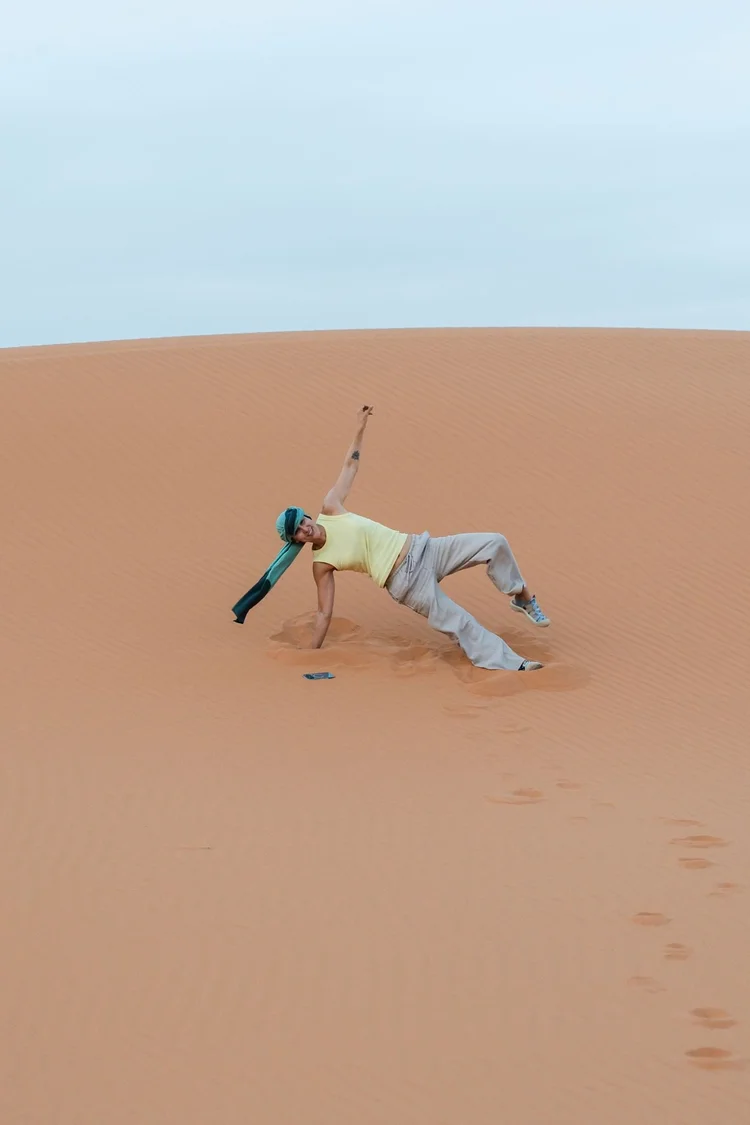
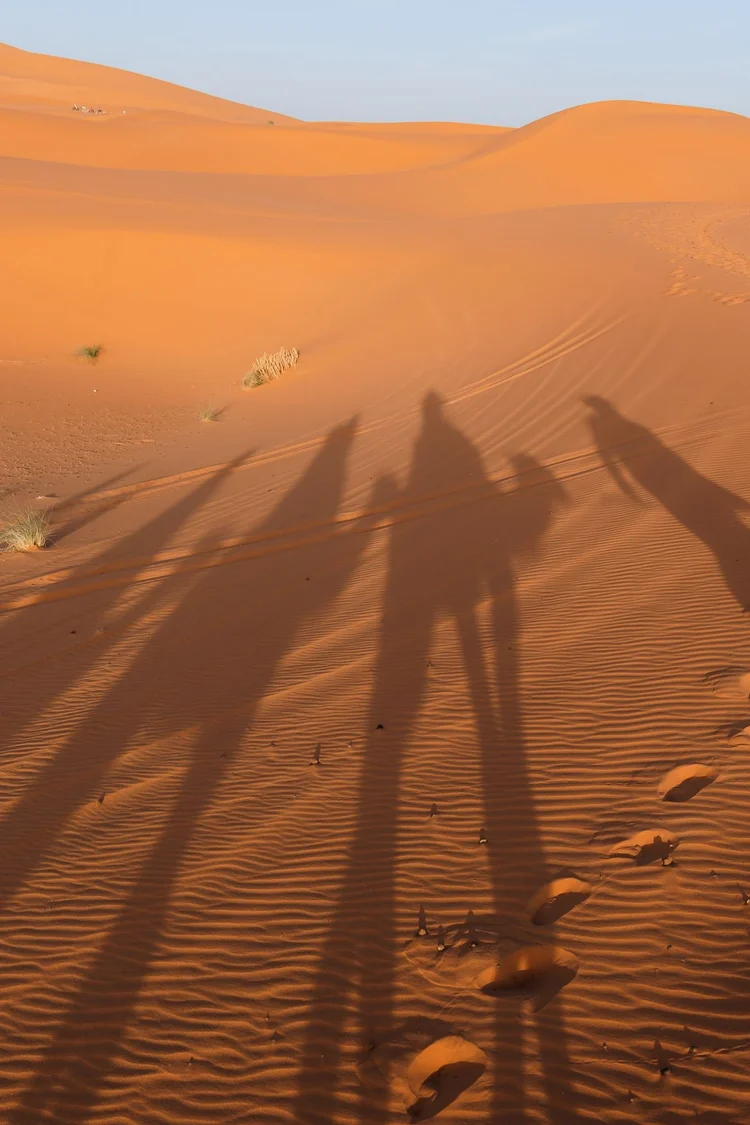
Pre-dawn in the desert is cool and still, and the sand is soft enough to walk barefoot. By mid-morning that same sand will burn your feet, so this is a true sunrise practice: we start around 6:15 and flow as the sun clears the dune line.
What I’ve learned- Practice at the base of a dune, away from the crest. Mats sink and standing poses wobble on a slope.
- Stay close to camp. Twenty minutes uphill in soft sand is a whole different workout.
- Make it optional. It follows a late night of music and fire. Sleeping in is allowed.
Gnawa music, honestly framed
A few kilometres from Merzouga is Khamlia, a village whose people descend from sub-Saharan Africans who came north across the Sahara over centuries. Their music, Gnawa, is a living tradition: the guembri bass lute, iron qraqeb castanets and call-and-response vocals.
You sit close, tea is poured, and the musicians play for about forty minutes. It’s real heritage in a shortened form for visitors; the all-night healing ceremony is a spiritual practice, separate from the performance. Go in the morning, contribute directly to the musicians, and ask before you photograph.
The gift of the second day
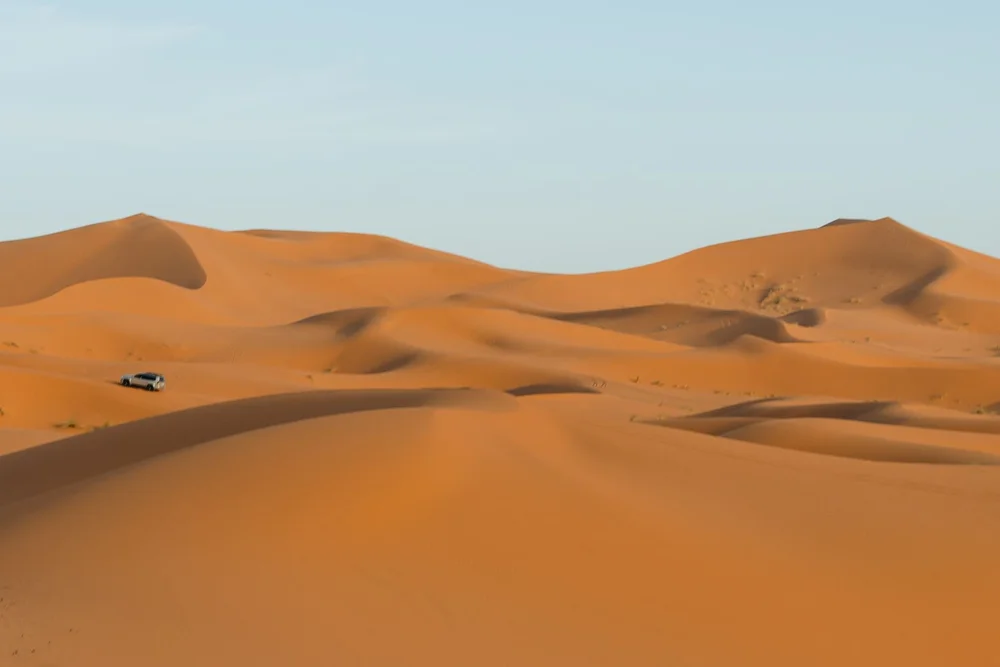
From late morning until about 4:30pm, the desert is too hot for much of anything. You can fight that or you can honor it. I honor it: shade, water, rest, stillness. Then back out at 5 for sandboarding or a 4x4 into the deeper dunes as the light turns gold, and a second sunset from a different dune.
The desert gives you the same gift twice. Two nights lets you actually receive it.
Sleep under Sahara stars with us
Get on the list and you’ll be the first to know when we announce dates.
Where we’re headed next
Itching to go sooner? Here’s where we’re traveling in the meantime.